Tupac Shakur (2Pac) built his film career starring in a handful of major theatrical features that showcased his raw intensity, charisma, and range as an actor.
Early Appearances and Breakthrough: Nothing But Trouble and Juice
Shakur’s screen debut came in the 1991 horror-comedy Nothing But Trouble, directed by Dan Aykroyd. He appeared briefly as a member of Digital Underground (the group that had helped launch his music career), performing in a fictional context. It was a minor cameo rather than a dramatic showcase.
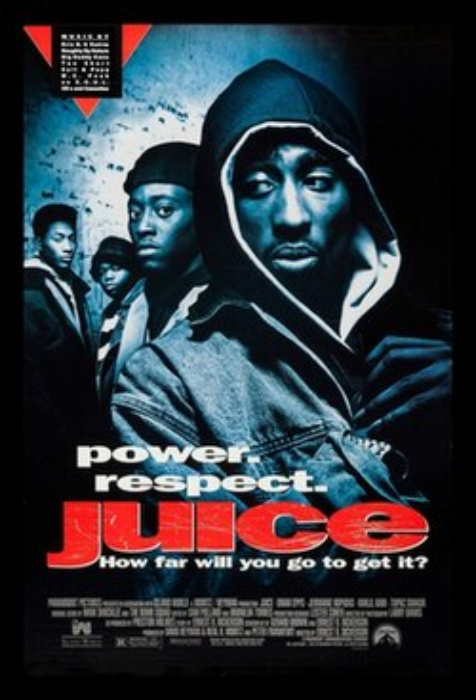
His first substantial role arrived the following year in Ernest Dickerson’s Juice (1992). Shakur starred as Roland “Bishop,” one of four Harlem friends (alongside Omar Epps as Q, Khalil Kain as Raheem, and Jermaine Hopkins as Steel) whose pursuit of “juice” (street respect and power) spirals into robbery, murder, and betrayal. Bishop’s transformation from restless teen into a cold, increasingly unhinged figure remains one of the most magnetic and chilling performances of the era. Critics and audiences responded strongly; the film earned solid reviews (often cited around 80%+ on Rotten Tomatoes aggregates in retrospective lists) and roughly $20 million domestically. Many still rank it as Shakur’s finest acting work—intense, magnetic, and free of vanity.
Romantic Lead and Street Antagonist: Poetic Justice and Above the Rim
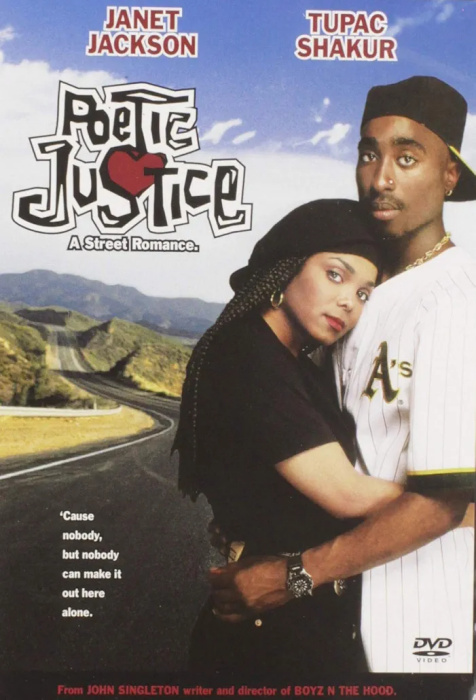
In 1993 Shakur co-starred with Janet Jackson in John Singleton’s Poetic Justice. He played Lucky, a South Central Los Angeles mailman who forms a tentative, evolving connection with Jackson’s Justice (a hairdresser and poet grieving a violent loss) during a road trip to Oakland. The film mixed romance, poetry (including Maya Angelou’s work), and observations on Black life in the early 1990s. Reception was more mixed than Juice—some praised the chemistry and humanizing portrayal of Lucky, while others found the narrative uneven—but it was a commercial success, grossing over $27 million domestically, and demonstrated Shakur’s ability to play a softer, more grounded character.
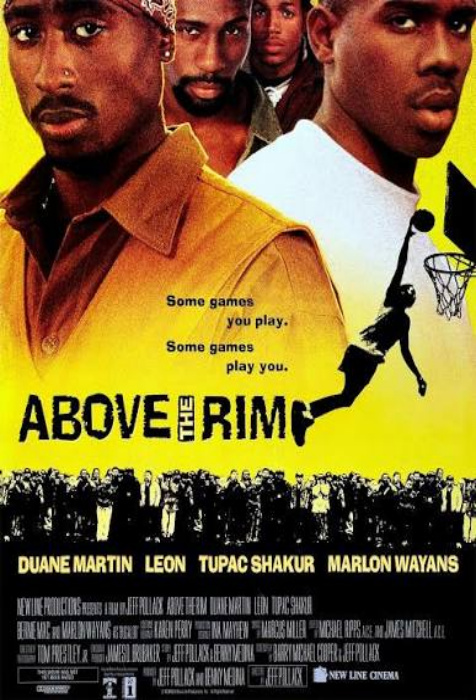
His final theatrical release during his lifetime was Above the Rim (1994). Shakur portrayed Birdie, a ruthless drug dealer and street-basketball team sponsor who tries to recruit and control a talented high-school player (Duane Martin) while clashing with his own estranged older brother (Leon). The film blended sports drama with crime elements; Shakur’s Birdie extended the menacing energy of Bishop while operating in a more ensemble context that also featured early appearances by Marlon Wayans and others. It performed solidly at the box office (around $16 million domestic) and remains a cult favorite among fans of 1990s urban cinema.
A minor uncredited appearance as a sniper in a segment of the 1995 short-film compilation Murder Was the Case: The Movie (tied to Snoop Dogg’s work) rounded out his on-screen credits before his death.
Posthumous Theatrical Releases: Bullet, Gridlock’d, and Gang Related
Three films shot earlier were released after Shakur’s murder, completing his feature acting filmography.
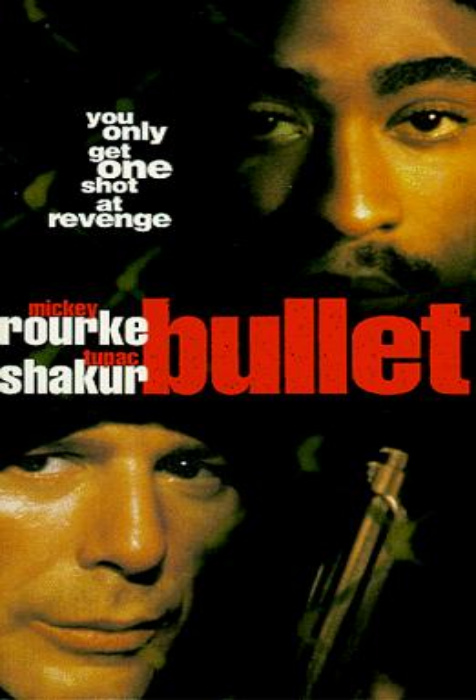
Bullet (1996), directed by Julien Temple and co-starring Mickey Rourke, cast Shakur as Tank, a dealer entangled in escalating grudges and gang conflict. It arrived in theaters roughly a month after his death and received limited attention, though Shakur’s presence is frequently noted for its intensity amid a dark, low-budget crime story.
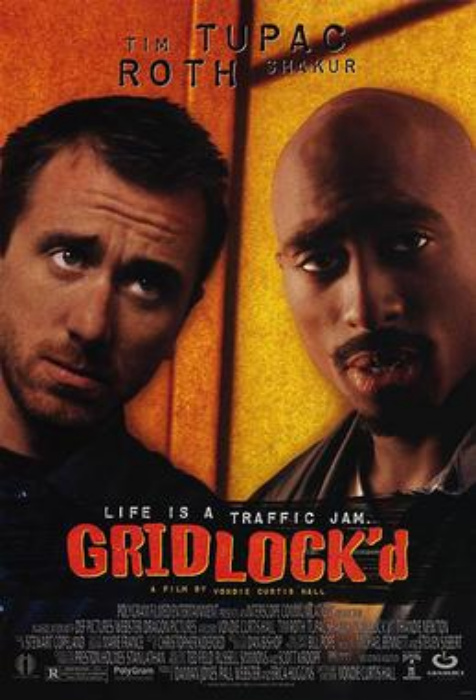
Gridlock’d (1997), directed by Vondie Curtis-Hall, is widely regarded as one of his strongest later performances. Shakur played Ezekiel “Spoon” Whitmore, a heroin-addicted musician who, with his best friend Stretch (Tim Roth) and singer Cookie (Thandie Newton), navigates bureaucratic absurdity and personal desperation while trying to get clean after an overdose. The dark comedy allowed Shakur to display vulnerability, dry humor, and chemistry with Roth; critics often highlight it as a revelation that moved beyond the street-tough personas of his earlier roles. It grossed about $5.5–6 million domestically.
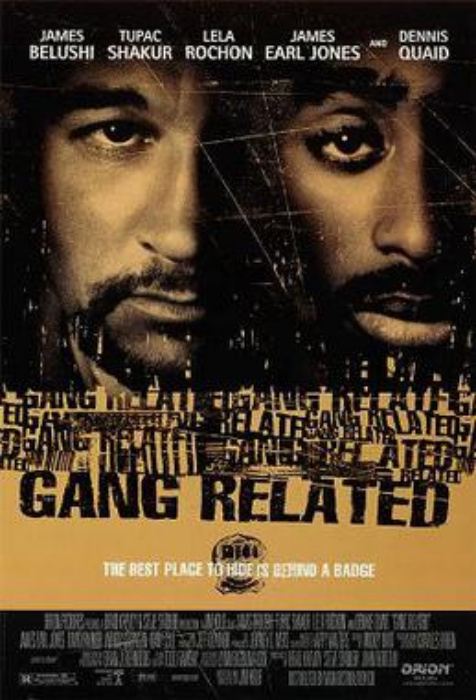
Gang Related (1997), his final filmed performance, cast him as Detective Jake Rodriguez, a corrupt cop opposite Jim Belushi. The crime thriller follows two officers covering up a murder that implicates them. Released more than a year after Shakur’s death, it closed out his acting career on a note of moral ambiguity and intensity.
Across these six primary features (plus the cameo), Shakur demonstrated genuine dramatic range—villainous volatility, romantic sincerity, street menace, and strung-out humanity—despite a career cut short. Box-office totals for his major live-action starring or co-starring vehicles reached into the tens of millions collectively, with Poetic Justice and Juice among the stronger performers.
Notable Documentaries
Shakur’s life, music, activism (shaped heavily by his mother Afeni Shakur’s Black Panther background), legal troubles, East Coast–West Coast tensions, and unsolved 1996 murder have inspired a large body of documentary work.
The most acclaimed feature is Lauren Lazin’s Tupac: Resurrection (2003). Constructed largely from Shakur’s own interviews, home movies, poetry, and archival footage, it lets him narrate his story from beyond the grave. It earned an Academy Award nomination for Best Documentary Feature, grossed nearly $8 million, and remains a definitive portrait focused on artistry and personal evolution rather than pure sensationalism.
Other significant entries include Nick Broomfield’s Biggie & Tupac (2002), which investigates the murders of Shakur and The Notorious B.I.G. through a conspiracy-oriented lens and on-the-ground reporting; Tupac Shakur: Thug Angel (2002), which emphasizes early life and Afeni’s influence; and various true-crime projects such as the Tupac Assassination series (beginning 2007) produced with input from figures close to the events.
The most recent major work is Allen Hughes’s five-part FX/Hulu docuseries Dear Mama (2023). It interweaves Shakur’s rise with Afeni Shakur’s activism and mother-son relationship, drawing on rare footage, family interviews, peers (including Snoop Dogg), and previously unheard material. Critics widely praised it for depth, complexity, and avoidance of pure hagiography or pure true-crime spectacle.
Additional documentaries and series (e.g., Before I Wake…, Who Killed Tupac?, Last Man Standing: Suge Knight and the Murders of Biggie & Tupac) continue to examine different angles of his life and death.
Biopics and Portrayals
The primary narrative biopic is All Eyez on Me (2017), directed by Benny Boom and starring Demetrius Shipp Jr. as Tupac (with Danai Gurira as Afeni and Jamal Woolard reprising Biggie from Notorious). Released on what would have been Shakur’s 46th birthday, it covers his life from childhood through Death Row, legal battles, and death. It faced mixed-to-negative reviews for pacing, accuracy, and dramatic choices, though Shipp’s physical resemblance and commitment drew some praise.
Shakur has also been portrayed in other films and series focused on related figures or events: Anthony Mackie as Tupac in Notorious (2009, the Biggie biopic); Marcc Rose in Straight Outta Compton (2015); and appearances or references in projects such as City of Lies (2018), the series Unsolved (2018), and others. A planned Snoop Dogg biopic has also announced casting for a Tupac role.
Shakur additionally wrote an unproduced screenplay titled Live 2 Tell in the mid-1990s.
Legacy on Screen
In a career spanning only a few years of serious acting, Tupac Shakur delivered performances that still resonate—particularly Bishop’s descent in Juice and Spoon’s weary humanity in Gridlock’d. His films captured the same urgency, contradiction, and charisma that defined his music and public persona. Posthumous releases, the Oscar-nominated Resurrection, the expansive Dear Mama, and the imperfect but widely seen All Eyez on Me ensure that new generations continue to encounter him not only as a rapper but as a complex screen presence and cultural figure whose story remains unfinished. His relatively small but potent body of film work stands as a parallel achievement to his recorded output, cut short far too soon.
Conclusion
Tupac Shakur’s brief but powerful film career remains a compelling chapter of his legacy—one that revealed an actor of genuine range, intensity, and humanity alongside the towering artist and activist the world already knew. From the chilling breakthrough of Bishop in Juice to the vulnerable, darkly comic Spoon in Gridlock’d, and through the many documentaries and the flawed yet widely discussed biopic All Eyez on Me, his screen presence continues to spark conversation nearly three decades after his death.
What stands out most to you about 2Pac’s movies? Do you have a favorite performance, a documentary that reshaped how you see him, or thoughts on how later portrayals have handled his story? Share your takes, memories, or recommendations in the comments—we’d love to hear them.