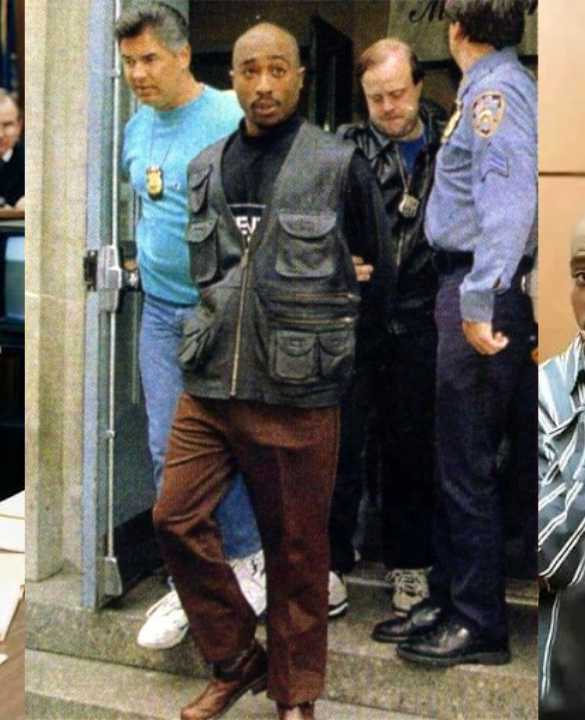
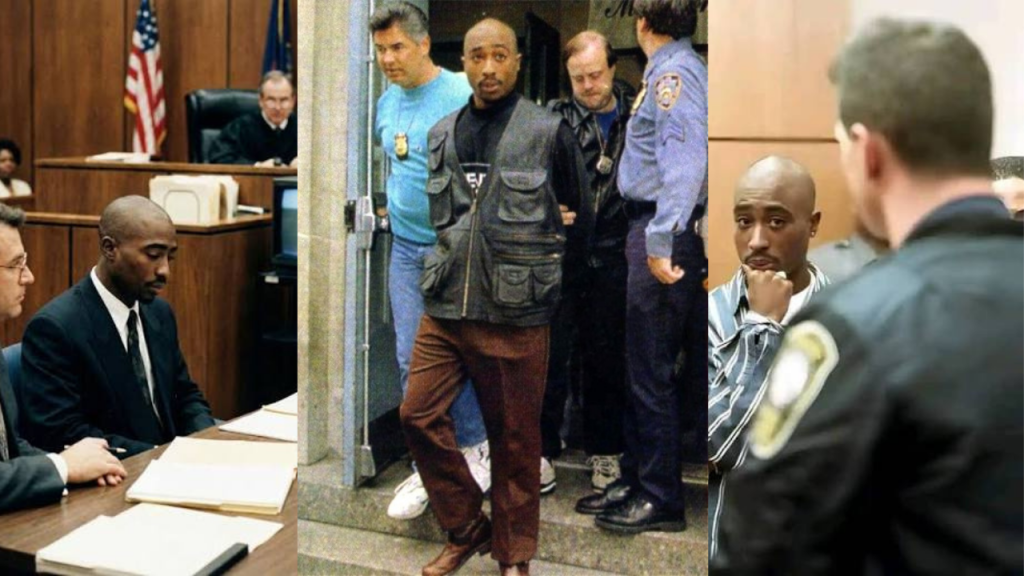
Civil suits and criminal trials during his lifetime complicated his career; while after death, battles over royalties, and accountability for his murder.
This article examines the major documented cases, drawing from contemporary reporting, court records summaries, and archival accounts. Details can vary slightly across sources due to settlements, sealed terms, and the passage of time; primary contemporaneous coverage provides the strongest verification.
Lawsuits & Legal Cases During His Lifetime
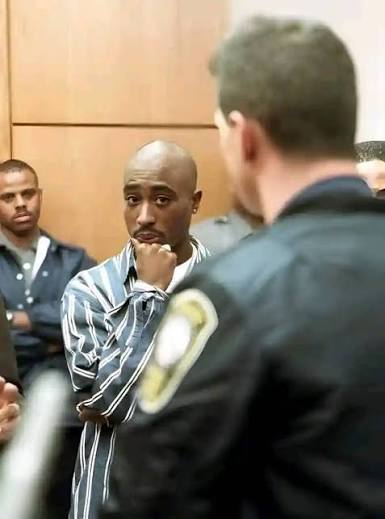
1. Tupac v. Oakland Police Department (1991)
On October 17, 1991, Oakland Police Department officers stopped Shakur for jaywalking at the intersection of 17th and Broadway. Shakur alleged that officers (identified in accounts as Alex Boyovich/Boyovic and Kevin Rogers/Rodgers) escalated the stop, choking him, slamming his head into the pavement, and arresting him for resisting arrest (charges later dropped). He filed a $10 million civil rights lawsuit alleging excessive force, false arrest, and a pattern of abuse against African Americans.
The City of Oakland settled out of court for approximately $42,000–$43,000 (most of which reportedly covered legal fees). Shakur had publicly stated that a larger award would fund community initiatives such as a boys’ home and a “Stop Police Brutality Center.” National Archives records confirm the civil rights complaint and related discovery.
2. The Menace II Society Director Assault (1993)
Shakur had been cast in the Hughes Brothers’ Menace II Society but was fired amid reported disagreements and erratic behavior during rehearsals. Shortly afterward, he and associates confronted co-director Allen Hughes on a music-video set. Hughes alleged a violent beating involving Shakur and others.
In 1994, Shakur was convicted of misdemeanor assault and battery. He was sentenced to 15 days in jail, additional work-crew time, fines, community service, and probation. Hughes later directed the documentary series Dear Mama about Shakur and his mother and has described the incident as a youthful clash of egos while noting Shakur’s subsequent apologies.
3. The Atlanta Police Shooting (1993)
On October 31, 1993 (Halloween night), after a performance, Shakur’s vehicle was involved in a confrontation with two off-duty police officers, brothers Mark and Scott Whitwell (from Clayton and Henry Counties). Accounts differ on the trigger—some describe the officers nearly being struck by a car or harassing a Black motorist, with racial slurs reported—but shots were exchanged. Shakur was charged with two counts of aggravated assault after the officers were wounded (one in the abdomen, one in the buttocks).
Charges against Shakur were dropped after evidence indicated the officers had been drinking, one possessed a gun taken from a police evidence/property room, and testimony supported that Shakur acted in self-defense after the officers initiated or escalated the confrontation. Mark Whitwell faced related charges (later resolved) and eventually resigned. Civil suits by the brothers followed; one resulted in a later default judgment against the estate.
4. Sexual Assault Trial & Related Proceedings (1993–1995)
In November 1993, a woman accused Shakur and members of his entourage of sexual abuse in a New York hotel room (Parker Meridien). She acknowledged prior consensual contact with Shakur but alleged non-consensual acts involving others during a subsequent visit. Shakur and road manager Charles Fuller maintained the encounters were consensual.
In December 1994, a jury acquitted them of sodomy and weapons charges but convicted them of first-degree sexual abuse (non-consensual touching/groping). On February 8, 1995, Shakur was sentenced to 1½ to 4½ years in prison. He served roughly eight to nine months at Clinton Correctional Facility before Suge Knight and Death Row Records posted $1.4 million bail pending appeal in exchange for a multi-album deal. The victim later filed a related civil suit that was settled.
5. Wrongful Death Suit: The Walker Family (1992 incident, settled 1995)
At a 1992 outdoor festival in Marin City, California, a brawl involving Shakur’s entourage led to a stray bullet that fatally struck 6-year-old Qa’id Walker-Teal. Ballistic evidence linked the bullet to a gun associated with Shakur. The boy’s mother filed a wrongful-death lawsuit.
In November 1995, shortly after trial opening statements, the parties reached a confidential settlement. A record company associated with Shakur paid the parents an estimated $300,000–$500,000.
Additional minor cases (e.g., a Michigan concert altercation involving a baseball bat that resulted in a misdemeanor plea and short jail time, and other assaults) further illustrate the pattern of legal entanglement that accompanied Shakur’s rising fame.
C. DeLores Tucker and Related Lawsuits (1995–2000s)
C. DeLores Tucker, a longtime civil rights figure, former Pennsylvania Secretary of the Commonwealth, and chair of the National Political Congress of Black Women, led a high-profile public campaign in the mid-1990s against “gangsta rap.” She criticized lyrics for promoting violence, misogyny, and negative stereotypes, targeting artists and labels including Tupac Shakur, Death Row Records, and its distributor Interscope Records (then partially tied to Time Warner). She partnered with figures such as William Bennett in calling for corporate divestment from such music.
Interscope/Death Row suits against Tucker (1995):
In August 1995, Interscope Records (joined in related actions by Death Row) sued Tucker in federal court in California. The companies alleged intentional interference with contractual relations, claiming she tried to persuade Suge Knight and Death Row to break their exclusive distribution deal with Interscope. According to the complaints, she offered or facilitated discussions of an alternative arrangement (potentially involving Time Warner financing or a “cleaner” rap venture) that would benefit her organization or allies. The suits also raised claims related to unfair practices and other torts. Tucker denied improper motives and characterized the litigation as an attempt to silence her criticism. The actions were later voluntarily withdrawn or dismissed (in part after a contractual interference claim was rejected), with the labels citing practical considerations such as collectability.
These suits occurred while Shakur was signed to Death Row and actively recording. They intensified the public feud.
Tupac’s lyrical response on All Eyez on Me (1996):
Shakur addressed Tucker by name in songs on the double album All Eyez on Me, released in February 1996. Tracks including “How Do U Want It” and “Wonda Why They Call U Bytch” used explicit language, accused her of hypocrisy or opportunistic motives (e.g., prioritizing money or destroying rather than helping the community), and employed vulgar insults. Lyrics referenced in reporting include lines such as references to her as a “muthafucka,” suggestions she was “too old to understand,” and imagery implying prostitution or selling out Black interests. These were widely understood as direct retaliation for her campaign.
Tucker’s lawsuit against Shakur’s estate and others (1997):
In July 1997 (nearly a year after Shakur’s death), Tucker and her husband William Tucker filed a $10 million+ lawsuit in the U.S. District Court for the Eastern District of Pennsylvania against the Estate of Tupac Shakur (represented by Afeni Shakur and co-administrators), Death Row, Interscope, Time Warner, Seagram, Tower Records, and others. Claims included defamation/slander, intentional infliction of emotional distress, and invasion of privacy. The complaint alleged that the lyrics caused “great humiliation, mental pain and suffering,” fear for her safety (including reported death threats), and damage to her reputation. William Tucker asserted a loss-of-consortium claim (loss of advice, companionship, and consortium), which media coverage often highlighted in connection with effects on their marital/sexual relationship.
Outcomes:
Federal courts dismissed the core claims against the estate and labels. The Third Circuit (and lower courts) held that the lyrics constituted protected expressions of opinion rather than actionable statements of fact capable of defamation, particularly given the context of a public controversy and Tucker’s status as a public figure. Related suits by the Tuckers against media outlets (e.g., Philadelphia Daily News, Time, Newsweek) for how they reported the “sex life”/consortium aspect of the original complaint were also largely unsuccessful, with courts applying actual-malice standards for public figures. Separate malicious-prosecution actions by Tucker (and later her estate after her 2005 death) against Interscope, Death Row, and their attorneys arising from the 1995 suits were mostly dismissed on summary judgment for lack of sufficient evidence of malice, though one limited claim (involving an abuse-of-process allegation drafted by attorney David Kenner) was partially revived and remanded by the Ninth Circuit in 2008.
These disputes illustrate the collision of free-speech protections for artistic expression, activist campaigns against cultural products, and aggressive litigation strategies by both sides in the mid-1990s hip-hop industry. They are distinct from Shakur’s personal criminal/civil matters but closely tied to his Death Row era work and the estate’s posthumous defense of his catalog and image.
Lawsuits & Estate Disputes After His Death (1996–Present)
Because Shakur died intestate at 25 with limited liquid assets (reports cite roughly $100,000–$120,000 in the bank plus vehicles), California intestacy rules initially pointed to an equal split between living parents. The estate’s value grew substantially through music sales, licensing, and catalog control.
Key posthumous battlegrounds included:
| Category | Primary Dispute |
|---|---|
| Estate Heirship | Afeni Shakur vs. William Garland (biological father) |
| Master Recordings | Afeni Shakur / Estate vs. Death Row / successors |
| Producer Royalties | Various producers/estates vs. Amaru / Trust |
| Wrongful Death | Family vs. Duane “Keffe D” Davis (and others) |
1. The Inheritance Battle: Afeni Shakur v. William Garland (1997)
William “Billy” Garland, confirmed by DNA as Shakur’s biological father, sought 50% of the estate. Afeni Shakur argued he had abandoned the child and provided negligible support (testimony referenced roughly $820, a bag of peanuts, and a movie ticket across decades, with long periods of no contact).
Los Angeles Superior Court Judge Arnold Gold ruled that Garland failed to establish the substantial parental relationship and support required under California law for an unmarried father to inherit. Afeni became sole heir/administrator. Later accounts mention a settlement in the range of roughly $900,000–$1 million in exchange for Garland relinquishing further claims to name, likeness, and royalties, though the core court ruling denied inheritance rights.
2. Afeni Shakur / Estate v. Death Row Records (1996–early 2000s)
Shortly after the murder, Afeni and co-administrator Richard Fischbein sued Death Row and Suge Knight, alleging withheld royalties (including from All Eyez on Me), improper charges, and control over unreleased masters. A 1997 settlement (terms largely confidential) and subsequent actions transferred significant rights in master recordings to the estate/Amaru Entertainment (founded by Afeni). This enabled numerous posthumous albums.
3. Estate v. Entertainment One / Death Row successors (2013–2018)
Afeni (and later the Trust) sued Entertainment One (which had acquired Death Row assets) over unpaid royalties (including for Beginnings: The Lost Tapes) and withheld unreleased masters. In 2018 the parties settled: the estate received a substantial six-figure payment and regained ownership/control of the unreleased master recordings. This solidified the estate’s (via Amaru and the Afeni Shakur Trust, later administered by Tom Whalley) position over the core catalog.
4. Wrongful Death Lawsuit Against Duane “Keffe D” Davis (filed 2026; ongoing context 2023–present)
Following the September 2023 indictment of Duane Keith “Keffe D” Davis for Shakur’s murder (he pleaded not guilty; trial delayed into 2026), Maurice “Mopreme” Shakur (stepbrother, acting for the estate of stepfather Mutulu Shakur) filed a civil wrongful-death suit in Los Angeles Superior Court in April 2026. It names Davis and “John Does 1–100” as alleged participants in a broader conspiracy, seeking damages and using discovery (including grand-jury materials and other recent sources) to identify additional parties. The civil case proceeds separately from the Nevada criminal proceedings. An earlier 1990s wrongful-death action by Afeni against Orlando Anderson (Davis’s nephew, killed in 1998) had been dismissed.
Broader Context and Legacy
These cases reflect larger patterns: police interactions and racial dynamics in the early 1990s, the intersection of celebrity, street culture, and the justice system, and the complex economics of hip-hop catalogs after an artist’s death. Afeni Shakur’s determined management of the estate—founding Amaru, litigating for masters and royalties, and establishing protective trusts—transformed a debt-burdened, contested inheritance into a lasting commercial and cultural asset. Ongoing producer royalty disputes and the civil murder action illustrate that legal chapters continue decades later.
For primary verification, consult contemporaneous reporting from outlets such as the Los Angeles Times, New York Times, San Francisco Chronicle/SFGate, court archives (e.g., National Archives for the Oakland suit), and official estate statements. Exact settlement figures are often confidential, and secondary summaries can differ slightly; the above prioritizes widely corroborated facts from multiple independent sources.
Conclusion: Legal Battles That Shaped a Legacy
2Pac’s encounters with the justice system—from the 1991 Oakland police brutality suit and the Atlanta self-defense shooting to the high-profile sexual abuse conviction, the Marin City wrongful-death settlement, and the posthumous wars over inheritance, masters, royalties, and accountability for his murder—were never peripheral. They drained resources, altered career choices, amplified his public image as both provocateur and victim of systemic pressures, and ultimately forced his mother Afeni and later the estate into decades of litigation to protect and monetize his artistic output. The Delores Tucker disputes further highlighted the cultural flashpoint his music represented, pitting free expression against activist critique in the courts.
Thirty years after his death, these cases continue to influence how his catalog is controlled, how his story is told, and how questions of justice around his killing remain unresolved. The estate’s victories in reclaiming masters and royalties stand as a testament to determined stewardship, while the ongoing civil action tied to Duane “Keffe D” Davis underscores that accountability is still incomplete.
As we mark 2Pac’s 30th memorial anniversary, these legal chapters invite reflection: Which of these battles do you believe most altered the course of his life or legacy? How should the unresolved aspects of his murder and the estate’s continuing fights be remembered or pursued today? What do these cases reveal about the intersection of celebrity, race, free speech, and the justice system in the 1990s—and what lessons still apply?
Share your thoughts, memories, or perspectives in the comments below. Your insights help keep the conversation—and 2Pac’s complex legacy—alive.