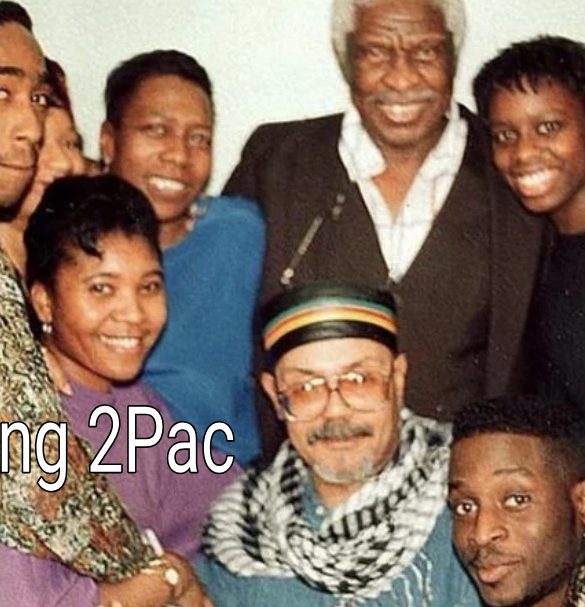
From Panther Roots to the Thug Life Code, an Examination of 2Pac’s Radical Legacy, Grassroots Organizing, and Critique of the Carceral State.
To reduce Tupac Amaru Shakur to a pop-culture icon or a tragic victim of hip-hop’s coastal rivalries is to erase the fundamental engine of his life’s work. Tupac was not an entertainer who occasionally flirted with social issues; he was a revolutionary thinker, organizer, and agitator who utilized music, cinema, and celebrity as delivery mechanisms for political warfare.
Understanding 2Pac’s politics requires moving past comfortable retrospective tributes and confronting what he actually stood for: Black self-determination, the dismantling of mass incarceration, an unflinching indictment of state violence, and the radical politicization of the street underclass.
1. The Panther Bloodline: Politics as an Inheritance
Tupac did not study revolutionary theory in an academic vacuum—he inherited it through family sacrifice and state repression.
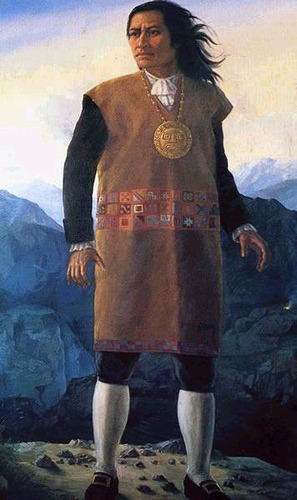
Named after Túpac Amaru II, the 18th-century Indigenous leader who led an insurrection against Spanish colonial rule in Peru, Shakur was born into the direct line of the Black Liberation Movement:
- His mother, Afeni Shakur, was an active section leader in the Harlem Chapter of the Black Panther Party and a defendant in the historic Panther 21 trial. While pregnant with Tupac, she faced hundreds of years in prison on conspiracy charges before representing herself and winning acquittal.
- His stepfather, Dr. Mutulu Shakur, was an acupuncture specialist, healthcare organizer, and leader within the Republic of New Afrika and the Black Liberation Army.
- His godfather, Elmer “Geronimo” Pratt (Ji-Jaga), was a decorated Panther leader falsely imprisoned for 27 years before his conviction was overturned.
- His aunt by marriage, Assata Shakur, remains an enduring symbol of political exile and radical Black resistance.
Growing up under the long shadow of the FBI’s Counterintelligence Program (COINTELPRO), Tupac witnessed firsthand how the state targeted, fragmented, and imprisoned revolutionary Black families. The trauma of watching freedom fighters hunted or marginalized did not deter him; it instilled a permanent conviction that the American political and economic system was fundamentally rigged against Black and impoverished communities.
2. The New Afrikan Panthers and Early Organizing
Before he was known as a recording artist, 17-year-old Tupac Shakur was elected chairman of the New Afrikan Panthers, the youth wing of the New Afrikan People’s Organization (NAPO).
In community centers and local meetings, Shakur was already debating dialectical materialism, anti-imperialism, and the political philosophies of Malcolm X, Frantz Fanon, and Kwame Nkrumah. This organizing background formed the ideological spine of his 1991 debut solo album, 2Pacalypse Now.
Tracks like “Words of Wisdom”, “Trapped”, and “Violent” were direct political critiques attacking the war on drugs, police militarization, and the criminalization of young Black men. When Vice President Dan Quayle publicly demanded the album be pulled from retail shelves following a police shooting, it underscored a reality the political establishment recognized immediately: Shakur’s music was actively radicalizing the youth they were trying to pacify.
3. T.H.U.G. L.I.F.E.: The Politicization of the Street
Tupac’s most misunderstood political concept remains THUG LIFE. While mainstream media, corporate critics, and political commentators dismissed it as an endorsement of lawlessness, Shakur conceived it as a diagnostic acronym:
$$\text{\textbf{T.H.U.G. L.I.F.E.}} = \textbf{T}\text{he } \textbf{H}\text{ate } \textbf{U } \textbf{G}\text{ive } \textbf{L}\text{ittle } \textbf{I}\text{nfants } \textbf{F}\text{ucks } \textbf{E}\text{verybody}$$
Tupac argued that the violence, nihilism, and addiction visible in the inner cities were direct byproducts of systemic neglect, divestment, and state oppression. If society starves children of resources, dignity, and opportunity, the resulting societal blowback—crime and instability—will inevitably destroy everyone.
More crucially, Tupac translated this philosophy into grassroots action:
- The 1992 Gang Truce: Following the 1992 Los Angeles uprising, Tupac collaborated with Mutulu Shakur, community organizers, and gang leaders across Watts and South Central to draft the Code of Thug Life.
- The Code as Non-Aggression Pact: Signed by Bloods and Crips, this 26-point treaty placed strict restrictions on community violence: banning crossfire in school zones, forbidding drive-by shootings, establishing protection for elders and children, and requiring non-violent dispute resolution mechanisms within neighborhoods.
Tupac recognized that intra-community street violence was self-destructive warfare that served the carceral state. His goal was to unionize the streets, channel raw survival instincts into collective self-defense, and build a unified political constituency out of society’s most disenfranchised.
4. The Carceral State, Poverty, and Systemic Critique
Long before mass incarceration became a standard subject of mainstream political debate, Tupac was dissecting the prison-industrial complex through his lyricism and interviews.
| Political Theme | Core Exhibition Track / Work | Ideological Analysis |
| Systemic Poverty & Reproductive Inequity | “Brenda’s Got a Baby” (1991) | Examines teenage pregnancy, institutional abandonment, and the absence of social welfare safety nets. |
| Police Brutality & State Surveillance | “Trapped” (1991) | Traces the psychological claustrophobia of racial profiling, stop-and-frisk, and modern chain gangs. |
| Capitalist Inequality & Redistribution | 1992 MTV Uncut Interview | Demands accountability from hyper-wealthy corporations and billionaires while families go unhoused. |
| Institutional Cynicism & Inevitable Change | “Changes” (Recorded 1992 / Released 1998) | Challenges systemic racism, noting that war budgets remain endless while poverty relief is withheld. |
| Political Prisoners & State Repression | “White Man’z World” (1996) | Direct solidarity tributes to Mutulu Shakur, Geronimo Pratt, and political prisoners across the diaspora. |
In his famous 1992 interview with MTV, Tupac delivered a blistering indictment of American capitalism:
“Everybody’s taught that from school: everybody wants to be rich. The problem is that nobody’s sharing… If you have a room with a hundred people, and two people have food and 98 don’t, how long before those 98 people kick the door in? It’s only natural.”
5. An Unfinished Blueprint
When Tupac was assassinated in Las Vegas on September 13, 1996, he was actively constructing the infrastructure for independent Black institutional power. He was in the process of building Euphanasia, a youth-development community center, establishing an independent record imprint, and developing voter education initiatives aimed directly at mobilizing formerly incarcerated felons and urban youth.
Thirty years after his passing, 2Pac’s politics cannot be sanitized into generic slogans about peace and unity. His political life remains an active challenge to institutional hypocrisy, police impunity, and the carceral machine.
To honor 2Pac at 30 years is not merely to celebrate his artistry, but to carry forward the unfinished work of organizing the forgotten, speaking truth to power, and demanding systemic liberation.
Continue the Dialogue: Where Do We Go From Here?
Thirty years later, Tupac’s political philosophy still holds up a mirror to our society. From the ongoing crisis of mass incarceration and police accountability to the economic divides fracturing our communities, the conditions 2Pac diagnosed in the 1990s remain urgent battles today.
His life proved that revolutionary art isn’t meant to be observed passively—it is meant to agitate, provoke, and inspire organized action.
We want to hear from you:
- Which of Tupac’s political messages, lyrics, or interviews resonates most with the struggles you see today?
- Do you believe the grassroots organizing model behind the Code of Thug Life could still work to unite and protect our communities now?
- How should the new generation carry forward his blueprint for systemic change?
Leave your thoughts, analysis, and reflections in the comments below. Every perspective adds to this living memorial.