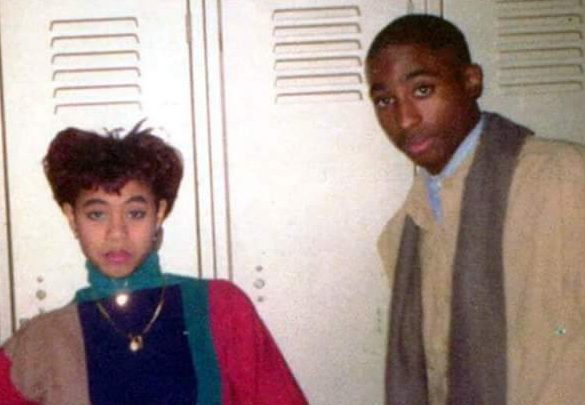
Jada Pinkett Smith and Tupac Shakur shared a profound, intense, lifelong friendship rooted in survival, artistic ambition, and mutual support.
They met as teenagers, remained close through fame and hardship, and she has described him as a “soulmate” in a non-romantic sense while repeatedly emphasizing the complete absence of physical chemistry. Rumors of romance have persisted (fueled by poetry, a film depiction, and public fascination), but primary sources, including her 2023 memoir *Worthy* and multiple interviews, portray it as a deep “friendship-love chemistry” or “ride-or-die” bond.
Meeting and Early Bond in Baltimore
They met around 1986 as sophomores at the Baltimore School for the Arts in Maryland. Shakur (then Lesane Parish Crooks / Tupac Amaru Shakur) was the new kid; Pinkett later recalled him as charismatic with a “beautiful smile,” energetic, and magnetic despite a “little peanut head” and not fitting her usual type. She has said they became “pretty much inseparable from the day we met,” sharing an instant connection.
Both came from challenging backgrounds involving drugs and addiction in their families. Pinkett has openly discussed dealing drugs around that time (her mother later intervened). They bonded over intelligence, passion for art (she studied dance and theater; he was immersed in poetry, acting, and early creative expression), being underestimated, and a shared drive to escape and create. Shakur nicknamed her “Square.” They supported each other’s ambitions; he wrote poetry dedicated to her (including one published later that begins with lines like “u r my heart in human form”), and she appeared in his music video for “Strictly 4 My N.I.G.G.A.Z.” Their connection was about survival as much as art.
Pinkett has described testing the romantic waters once as teens: she dared him to kiss her (or they tried on a date/back porch), and both found it “disgusting” or “ew”—mutual confirmation of zero physical chemistry. She has said the higher power seemed to design them as a “dynamic duo” without the ability to get together romantically, because their shared intensity and passion might have been destructive if sexualized. They also reportedly served as each other’s wingmen/women.
Shakur moved to California; they stayed in touch as his music career took off and hers in acting began (her early film *Menace II Society* had a connection via him before he was dropped from the project).
The Prison Proposal and Later Strain
In 1995, while Shakur was incarcerated on Rikers Island (on sexual-abuse charges; he was later transferred), Pinkett visited him. She has described him as being in bad shape and the visits as painful. He sent a letter (or proposed during a visit) asking her to marry him, framing her as the “friend, lover and soulmate” who had been there all along, citing her loyalty and intensity, and saying his existence depended on her saying yes. He reportedly also approached her mother.
She considered it briefly but declined. The deal-breaker, per her memoir and interviews, was his expectation of a physical/conjugal marriage; she could not do that. She viewed the proposal as coming from a fragile place—he needed an anchor or foundation while locked up—rather than genuine romantic desire. She has said she would have supported him through the sentence regardless, without marriage, and that he likely would have divorced her upon release. (Note: around the same period he was involved with/engaged to Keisha Morris, whom he married while incarcerated; that marriage was later annulled.)
After his release (bailed by Suge Knight / Death Row), they met for lunch. Their relationship had already been volatile at times. She expressed concern about his new associations, the East Coast–West Coast tensions, and his changed “vibe.” He accused her of going “Hollywood.” It escalated into a major argument; they stopped speaking and were not in contact when he was fatally shot in a Las Vegas drive-by in September 1996. She has said their pattern included intense arguments and temporary silences, and that he knew of her love for him. She later received his ashes at a private memorial (delivered by Knight), an experience she described as devastating and rage-inducing.
Public Perception, Will Smith’s Jealousy, and Cultural Depictions
The intensity of their bond—visible in photos, her unwavering support, his poetry, and her public affection—has long fueled romance rumors. The 2017 biopic *All Eyez on Me* depicted a more romanticized version; Pinkett publicly called it “deeply hurtful” and inaccurate on key details of their relationship (e.g., specific scenes involving poetry readings, goodbyes, or arguments), stressing that it was never about a cute-girl/cool-guy romance but about survival.
Will Smith has openly discussed his “raging jealousy” over the connection in his memoir and interviews. He described their love as legendary and “ride or die,” noted that they were never intimate, and admitted insecurity about how she viewed Shakur versus him (the “Fresh Prince”). He regretted never becoming friends with Shakur and said the dynamic left him feeling inadequate at times. Their son Jaden has also referenced the proposal anecdote publicly.
In promoting Worthy (2023), Pinkett reiterated that Shakur was a soulmate (possibly across “past lives” in various forms), that soulmates are not exclusively romantic (children can be soulmates too), and that the chemistry was purely friendship-love. She has rejected the idea of regret over not pursuing romance, calling it impossible.
Legacy of the Bond
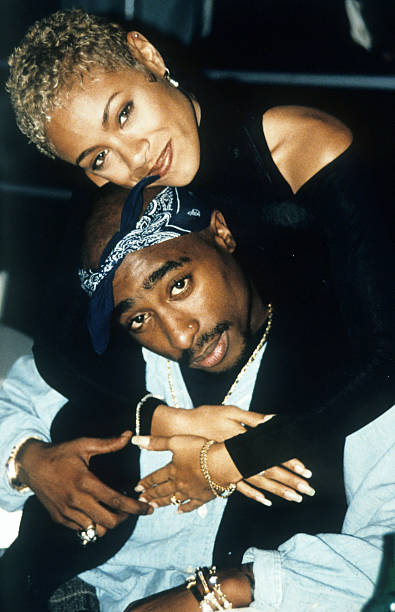
Their relationship stands as one of the more documented examples of a profound platonic connection between two rising cultural figures in the 1980s–90s. It involved mutual artistic encouragement, loyalty through legal and personal crises, shared trauma, poetry, arguments, and enduring emotional impact. Pinkett has said the loss was enormous—she expected him to be present long-term—and that she keeps his memory alive with her children.
While fan speculation and secondary portrayals sometimes cast it as a thwarted romance or “affair,” the people closest to the story (especially Pinkett herself, corroborated in broad outline by Will Smith’s account of non-intimacy) describe a rare, non-sexual soul-level friendship shaped by circumstance, chemistry of a different kind, and the turbulent worlds they navigated. No credible evidence from primary accounts supports a physical or sustained romantic relationship; the public fascination often projects romance onto intensity that the participants themselves framed differently.
Conclusion: A Bond That Still Sparks Debate Three Decades Later
In the end, the connection between Jada Pinkett Smith and Tupac Shakur stands as one of the most enduring and debated relationships in hip-hop and Hollywood history. What began as two ambitious teenagers finding each other at the Baltimore School for the Arts grew into a fierce, complicated loyalty that survived distance, fame, prison walls, and bitter arguments—yet never crossed into romance, according to the woman who knew him best. Jada has consistently described it as a soulmate friendship forged in survival, creative fire, and mutual recognition, not physical desire. Tupac’s poetry, his prison proposal, and the raw intensity of their final falling-out only deepen the mystery for those who still wonder what might have been.
Thirty years after his death, that bond continues to fascinate because it challenges easy categories. Was it pure platonic love, a near-romance that destiny blocked, or something rarer—a partnership of equals who simply could not be lovers? Fans, historians, and those who lived through the era still argue over the details: the meaning of his letters, the accuracy of film portrayals, Will Smith’s admitted jealousy, and whether Jada’s accounts fully capture the man she called her dynamic duo partner.
What do you think? Did their relationship represent the purest form of “ride or die,” or was there more to the story than has been publicly told? How does this chapter of Tupac’s life shape the way you remember him today? Share your thoughts, memories, or theories below—this memorial space is for keeping the conversation, and his legacy, alive.